
Whatnot Hits a $20 Billion Valuation as Live Shopping Becomes a Real Creator Income Stream
The live shopping platform raised $545 million at a $20 billion valuation, nearly double its price nine months ago, as full-time sellers and creators like MrBeast turn livestream commerce into a serious income stream.
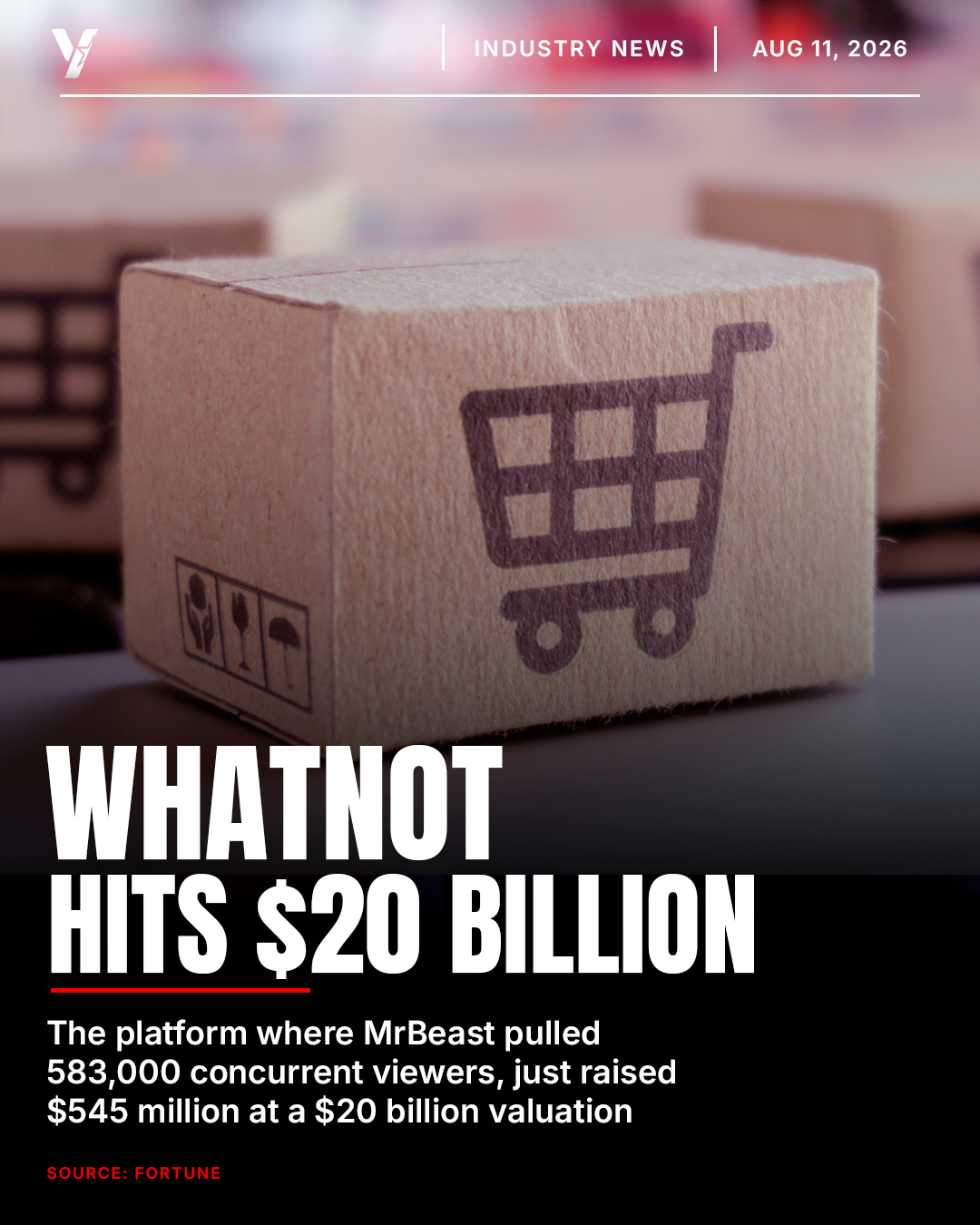
Whatnot just closed the largest funding round live shopping has ever seen. The company raised $545 million in a Series G round on August 7, valuing it at $20 billion, almost double the $11.5 billion price tag it carried nine months earlier. For creators, the number that matters more than the valuation is this one: sellers on the platform who have passed $1 million in lifetime sales more than doubled over the past year.
Live shopping has been treated as a novelty for most of its existence in the United States. Whatnot's raise, and the creators already earning full-time income from it, suggest that window is closing.
The numbers behind the raise
The round was led by ICONIQ, Lightspeed Venture Partners, and Avra, with Kleiner Perkins, Wellington Management, and existing backers Andreessen Horowitz, Greycroft, and Y Combinator also participating. Whatnot has now raised roughly $1.5 billion since its founding in 2019, when it started as a livestreamed auction site for Funko Pops.
The growth behind the valuation jump is real, not just narrative:
- Gross merchandise value hit $8 billion for all of 2025, and Whatnot had already matched that figure by the middle of 2026
- Buyers on the platform more than doubled year over year
- The platform has crossed 1 billion total orders
- 650,000 new users are joining every week
- The share of sellers earning full-time income from Whatnot grew 25% in the past year
Whatnot now estimates the overall live shopping market at more than $22 billion, and puts its own share of that market at roughly 60%.
How creators are actually making money on it
Whatnot started narrow, built entirely around collectibles like trading cards and Funko Pops sold through live auctions. It has since expanded into what the company describes as hundreds of categories, including designer fashion and even fresh food, while keeping the same format: a host on camera, a live audience, and real-time bidding or checkout.
That format is exactly what makes it a natural fit for creators who already know how to hold an audience's attention on camera. Selling on Whatnot does not require building a separate storefront or learning a new production style. It uses the same skill set as hosting a stream, applied to a checkout flow instead of a chat box.
The clearest proof of that fit came in February 2026, when MrBeast hosted a Super Bowl Sunday giveaway show on his own Whatnot account. The one-hour stream pulled 583,000 concurrent viewers, the largest live shopping audience in U.S. history, and gave away prizes including a Lamborghini Spyder, a San Francisco 49ers Super Bowl ring, and a gold bar. Logan Paul, FaZe Lacy, and Gary Vaynerchuk joined as guests. It was a giveaway, not a typical sales stream, but it proved a creator with an existing YouTube audience could move that audience onto a live commerce platform at a scale no traditional retailer could match.
Why investors are betting on live shopping instead of AI
Whatnot's raise is notable partly because of what it is not. Most of the largest venture rounds in 2026 have gone to AI infrastructure and model companies. Whatnot is neither. CEO Grant LaFontaine has acknowledged that pitching a consumer marketplace to investors focused on AI created friction, but said the response from some backers has been the opposite: relief at finding a consumer company with genuine network effects, where more buyers attract more sellers and more sellers attract more buyers.
Iconiq's Yoonkee Sull made a similar point about the company's growth pattern, framing Whatnot's strength as coming from a highly engaged, community-driven user base rather than from scale achieved first and monetized later. The company is not ignoring AI entirely. It acquired the machine learning startup Shaped in July 2026 to improve recommendations and search, and LaFontaine has said new capital will go toward smarter seller tools and AI-assisted listing and business insights.
What this means for YouTube creators specifically
YouTube has its own shopping tools built directly into the platform, letting creators tag products in videos and livestreams without sending viewers elsewhere. Whatnot represents a different bet: a dedicated live commerce app where selling, not video content, is the entire point of the session.
For creators already comfortable going live, the two are not mutually exclusive. A growing number of YouTubers are using Whatnot the way podcasters use a second platform for premium content: as a dedicated venue for a specific format, run in parallel with their main channel rather than as a replacement for it. The MrBeast stream is the extreme version of this. The more relevant example for most creators is the wave of full-time sellers Whatnot says it now has, creators who treat live selling as a primary income source rather than a one-off stunt.
What creators should watch next
- Category fit matters more than platform hype. Whatnot's growth is concentrated in collectibles, fashion, and now food. Creators outside those categories should look at what is actually selling on the platform before assuming it will work for their audience.
- Full-time seller growth is the number to track, not GMV. A 25% jump in creators earning full-time income says more about whether this is a durable income stream than the total dollar volume moving through the platform.
- Expect more AI-assisted seller tools. With fresh capital earmarked for AI in the selling experience, creators should expect Whatnot to roll out smarter listing and discovery tools that could lower the production bar for new sellers.
- International expansion could open the platform to non-U.S. creators. Whatnot already operates in the UK and Europe, and market expansion is an explicit use of the new funding.
What comes next
Whatnot has not announced a public offering, and a $20 billion private valuation gives it plenty of room to keep raising before facing that pressure. What is worth watching is whether the platform's growth in full-time sellers holds up as it expands into new categories and countries, since that is the metric that actually signals whether live shopping is a stable income source for creators or a trend tied to collectibles and a handful of viral moments.
“A creator income stream is only real once people can build a full-time living on it. Whatnot just crossed that line for a meaningful number of sellers, and that matters more than any valuation headline.”
— YouTubeSkool Creator Economy Desk
Frequently asked questions
What is Whatnot?+
Whatnot is a live shopping app where sellers host real-time video streams and viewers buy products, from trading cards and collectibles to fashion and food, through live auctions or direct checkout during the stream.
How much is Whatnot worth now?+
Whatnot raised $545 million in a Series G round on August 7, 2026, valuing the company at $20 billion. That is nearly double its $11.5 billion valuation from October 2025.
Can YouTube creators make money on Whatnot?+
Yes. Whatnot rewards the same skills used for hosting a YouTube livestream, and a growing number of creators are running Whatnot streams alongside their main channel. MrBeast's February 2026 Whatnot giveaway pulled 583,000 concurrent viewers, the largest live shopping audience recorded in the United States.
How is Whatnot different from YouTube Shopping?+
YouTube Shopping lets creators tag and sell products within their existing video or livestream content. Whatnot is a separate, dedicated live commerce app which creators can use in addition to, not instead of, their YouTube channel.
What categories sell best on Whatnot?+
Whatnot started with collectibles like Funko Pops and trading cards and has expanded into hundreds of categories, including designer fashion and fresh food, though collectibles remain central to its growth.
Get the editing behind every winning video
Free 60-second channel audit, then get your content edited in your chosen style. Trusted by creators who treat YouTube like a business.
Related stories
 Industry
Razer Acquires StreamElements, Rescuing It From a Possible Shutdown
Razer acquired StreamElements' business assets from Live Momentum Ltd on July 31, 2026, folding the streaming dashboard used by millions of creators into its ecosystem after months of layoffs and shutdown fears. Here is what is changing and what is not.
 Monetization
YouTube Doubles Partner Program Requirements for 2027
YouTube will require 8,000 watch hours or 20 million Shorts views to join the Partner Program starting February 1, 2027, twice today's bar.
 Monetization
YouTube's Monetization Rules Now Draw the Line on AI Slop
YouTube clarified its Partner Program guidelines on July 16, 2026, spelling out three categories of inauthentic content ineligible for monetization, from template-based videos to AI personas discussing health and finance.