
Spotify's AI Persona Label Cuts Artist Recommendations
Starting in September, unlabeled AI Persona profiles lose access to Spotify's recommendations entirely, unless the person behind the music builds a real, ongoing public identity.
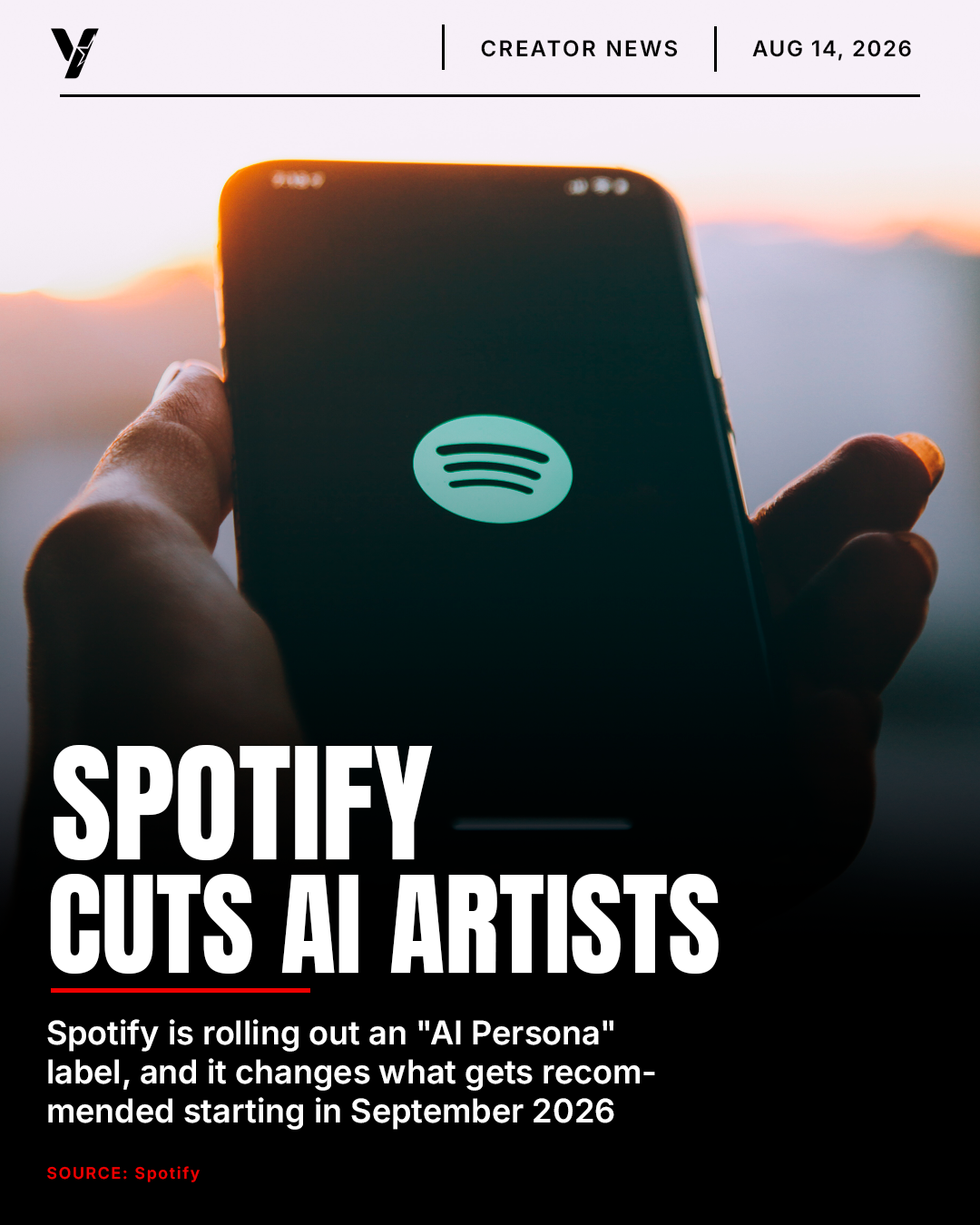
Spotify is drawing a new line between artificial intelligence and authenticity, and this time it goes beyond flagging AI-made tracks. Starting September 2026, any artist profile that Spotify determines represents a photorealistic AI-generated identity, rather than a real person, will carry an "AI Persona" label and lose access to editorial playlists, algorithmic recommendations, and personalized discovery by default.
What Spotify Is Actually Changing
Self-disclosure opened on August 11, 2026, through Spotify for Artists, giving musicians a way to voluntarily tag their own AI Persona profiles before the company starts labeling them independently. Spotify has said it will not rely only on artists to self-report. The company reviews profiles directly, prioritizing the most-listened-to accounts first, and applies the label once it determines a public identity is not a real person.
- Self-disclosure opened August 11, 2026, through Spotify for Artists
- Spotify-applied labels for undisclosed profiles start appearing publicly by mid-September 2026
- Review prioritizes the most-listened-to profiles first, then works down through smaller accounts
- Labeled AI Persona tracks stay on the platform, but drop out of recommendations unless a listener already follows the artist
- A listener-facing tool to report suspected unlabeled AI Personas is expected in the coming months
- Artists can appeal a label they believe was applied incorrectly
The Loophole: A Real Identity Still Wins
Spotify is not banning AI-made music. The distinction it is drawing is between how a track was produced and whether the public-facing artist behind it is real. A musician who uses generative tools to help write, produce, or perform a song but releases it under their own name, face, and an ongoing public presence keeps full access to recommendations. The label targets fabricated identities, not the technology used in the studio.
“Platforms have stopped asking whether a track was touched by AI and started asking whether a real person stands behind it. That shift is coming for every platform that runs on recommendations, not just Spotify.”
— YouTubeSkool Creator Economy Desk
Why This Should Matter to YouTube Creators, Not Just Musicians
YouTube drew a similar line on July 16, 2026, when it clarified which content counts as inauthentic for Partner Program monetization. That policy names AI personas offering advice on sensitive topics like health and finance as one of three categories that lose ad eligibility, alongside generic template-based videos and low-effort filler content. Spotify's AI Persona label applies the same logic to music: an unclaimed AI identity that never discloses itself now loses default distribution too, not just ad revenue.
What Creators Should Do Now
- Keep your public identity consistent and real (name, face or voice, and a visible history) even on channels that lean heavily on AI tools in production
- Do not build a channel around a fictional AI persona if you want to stay eligible for recommendations and monetization on platforms adopting this identity-first model
- Review your YouTube content against the inauthentic content rules, especially if an AI persona on your channel gives advice on health, finance, or other sensitive topics
- Keep records of your production process so you can respond quickly if an automated system flags your channel incorrectly
- Watch for similar reporting or labeling tools rolling out on other platforms over the next few months
What Comes Next
Spotify has not given an exact date for its listener-facing reporting tool, only saying it is coming in the following months. Enforcement starts with the most-listened-to profiles and works down from there, so smaller accounts have a longer runway before an automated review reaches them. Spotify has said it removed 75 million spam tracks over a 12-month period, and one independent tracker, SlopTracker, has reported that a small group of 49 AI uploaders pulled in around 2.5 million dollars in royalties that would otherwise have gone to human musicians. That figure comes from a third-party monitor, not a number Spotify has confirmed itself. Expect more platforms to move toward this same identity-based model as AI-generated content keeps scaling.
The message for creators across platforms is the same one YouTube has been sending since July: using AI tools is not the problem. Hiding who you are behind them is. Spotify just became the latest major platform to write that distinction into its recommendation algorithm, and it likely will not be the last.
Frequently asked questions
What is a Spotify AI Persona?+
It is a label Spotify applies to artist profiles whose public identity, meaning the name and imagery attached to the music, appears to represent a photorealistic AI-generated person rather than a real human being.
When does Spotify's AI Persona policy take effect?+
Self-disclosure opened on August 11, 2026, through Spotify for Artists. Spotify-applied labels for undisclosed profiles start appearing publicly by mid-September 2026.
Does Spotify ban AI-generated music?+
No. The policy targets undisclosed fake identities, not the use of AI tools in production. A real artist who uses generative tools but maintains an authentic public identity keeps full access to recommendations.
How does this affect YouTube creators?+
It mirrors the distinction YouTube drew in its July 16, 2026 monetization update, which strips ad eligibility from AI personas giving advice on sensitive topics. Creators running AI-persona-style channels on either platform should expect identity, not just content quality, to factor into monetization and distribution.
Can an artist appeal an AI Persona label?+
Yes. Spotify has said artists can contest a label they believe was applied incorrectly.
Get the editing behind every winning video
Free 60-second channel audit, then get your content edited in your chosen style. Trusted by creators who treat YouTube like a business.
Related stories
 Monetization
YouTube's Monetization Rules Now Draw the Line on AI Slop
YouTube clarified its Partner Program guidelines on July 16, 2026, spelling out three categories of inauthentic content ineligible for monetization, from template-based videos to AI personas discussing health and finance.
 Monetization
YouTube Doubles Partner Program Requirements for 2027
YouTube will require 8,000 watch hours or 20 million Shorts views to join the Partner Program starting February 1, 2027, twice today's bar.
 Industry
The FTC Is Reportedly Preparing a Complaint Over YouTube's Moderation Policies
Bloomberg reports the FTC is nearing a formal complaint against YouTube, alleging the platform told creators one set of content rules while enforcing a stricter, undisclosed standard behind the scenes.